

A 16‑Year Gap: An Unbiased Three‑Way Camera Comparison
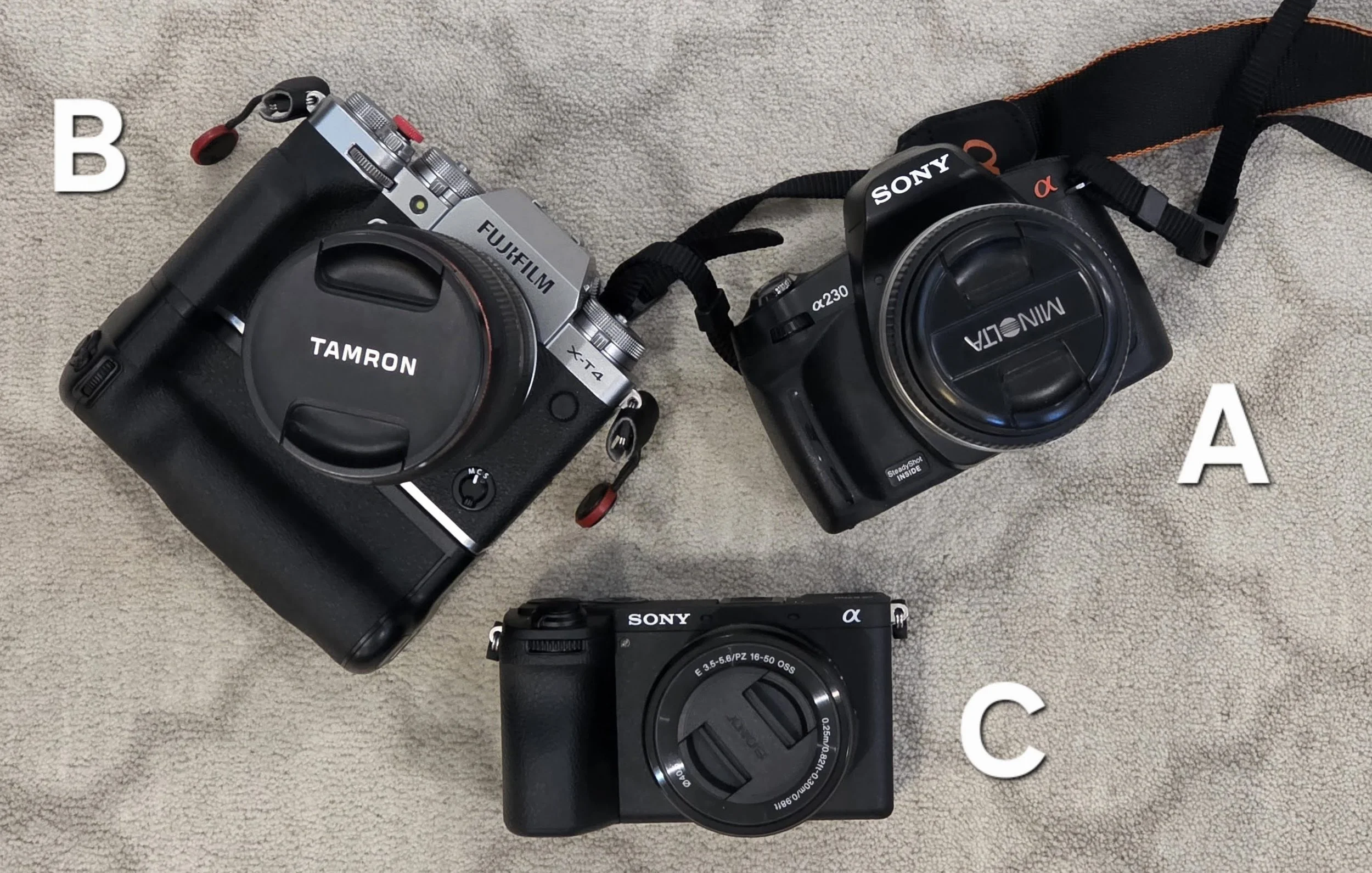
A head-to-head of Old Body + Older Lenses, a Mostly-New Body + Good Lenses, and a Brand New Body + Meh Lenses
Camera A: Sony A230 (2009) + Minolta lenses (1995)
Camera B: Fujifilm X‑T4 (2020) + Tamron 17–70mm f/2.8 (2022)
Camera C: Sony A6700 (2023) + Sony 16–50mm f/3.5–5.6 (2013)
Every so often, it’s healthy to step back and ask a question that most photographers don’t actually want answered:
How much better are modern cameras, really?
To explore that, I ran a deliberately impractical but revealing experiment: pitting a 16‑year‑old Sony DSLR with 30‑year‑old Minolta glass against two modern APS‑C mirrorless bodies. The goal wasn’t to crown a winner based on specs alone, but to see how these cameras actually perform in real‑world shooting scenarios when placed on equal footing. I looked incredibly foolish hauling around three digital cameras walking through a park, but I will admit that the highlight of my day was hearing a group of young kids say to one another, "Oh dang, that's a cool camera that that guy has." I had an extra pep in my step after that.
I approached this as impartially as possible. Same photographer. Same intent. Same subjects. RAW capture across the board. Comparable focal lengths. And a mix of lighting scenarios that reflect how cameras are actually used, not just how they’re tested on spec sheets.
The Test Methodology
To minimize bias, I ran several controlled experiments:
Multiple times of day
Mixed lighting and harsh contrast
Identical subjects across all three systems
Comparable apertures (as close as possible, with lens limitations accounted for)
Cropped images to match framing when necessary
One important caveat: I know I can make good images with all three of these cameras. Skill matters. But tools still shape the experience, and sometimes limit what’s possible.
The Minolta lenses on the A230 (a 35–80mm and 75–300mm) are optically decent, but their slow maximum apertures create real limitations. The A6700’s kit lens is frankly underwhelming and nearly a decade old. The Fuji sits somewhere in the middle: a slightly older body paired with a relatively modern third‑party zoom.
That imbalance turned out to be the most interesting part of this comparison.
Experiment 1: Low Light (Indoor, Night)
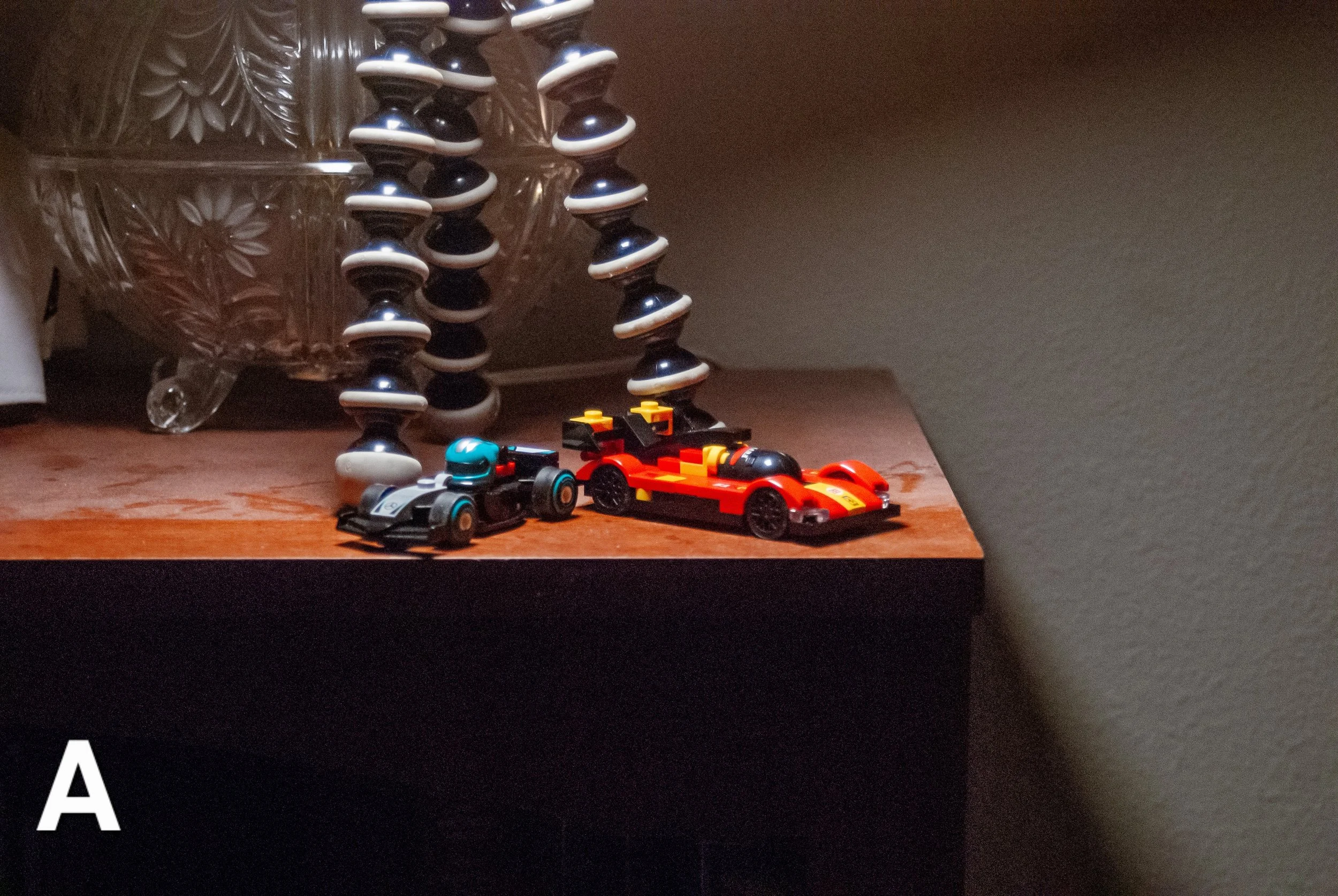
I started indoors at night, pointing all three cameras at LEGO figurines on a bookshelf. With the lights completely off, all three cameras performed poorly, no surprises there.
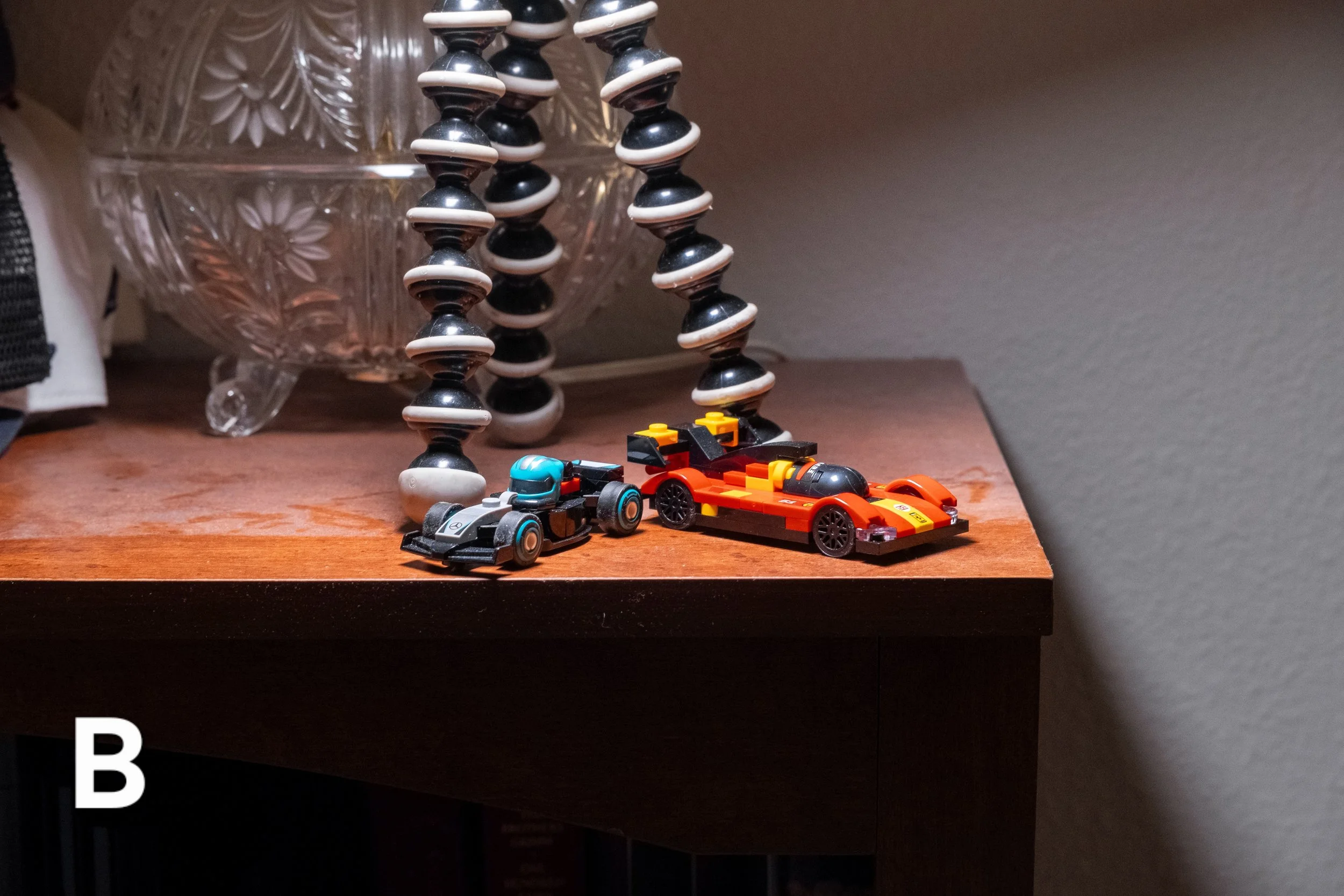
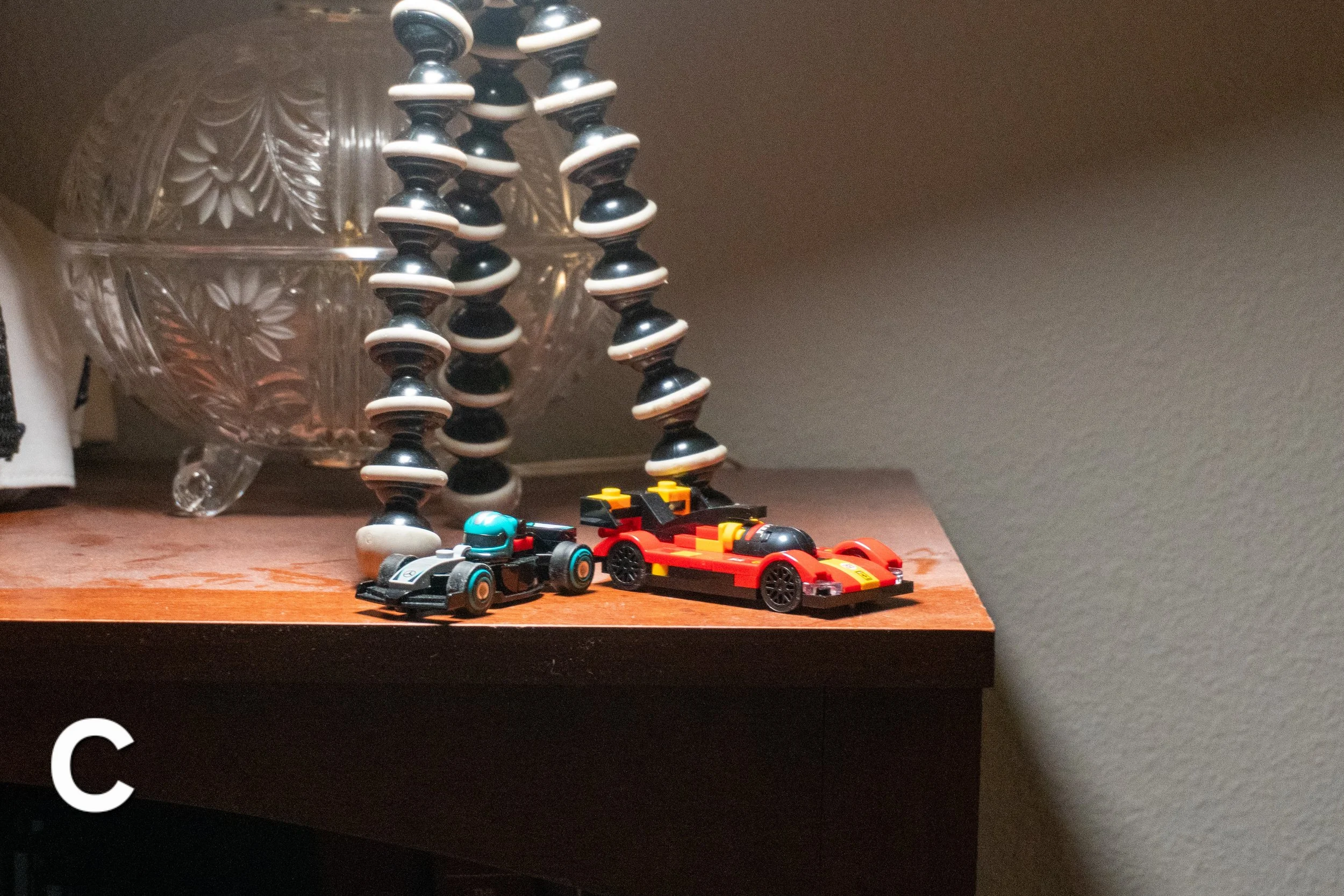
When I added a single overhead light, the differences became immediately obvious.
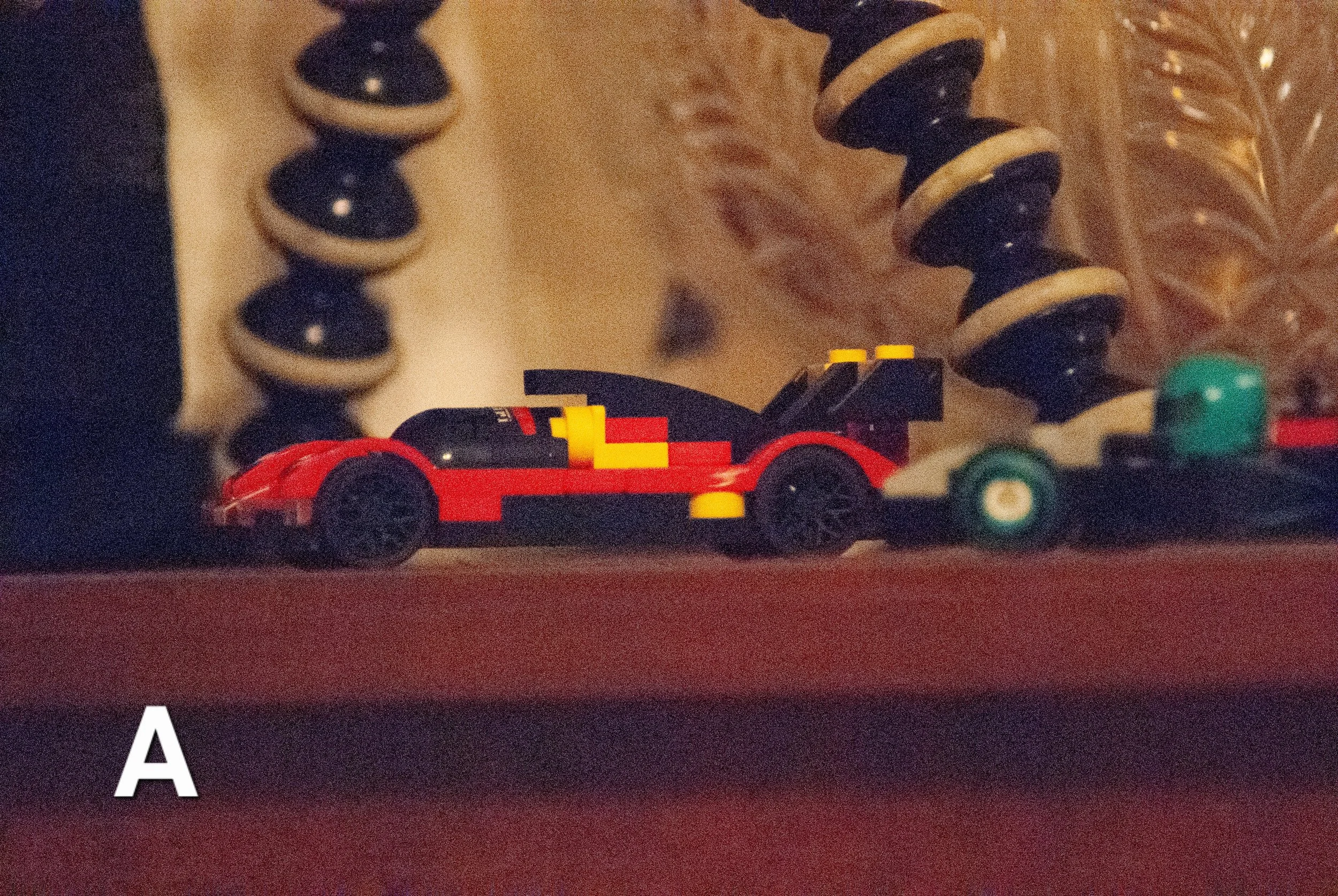
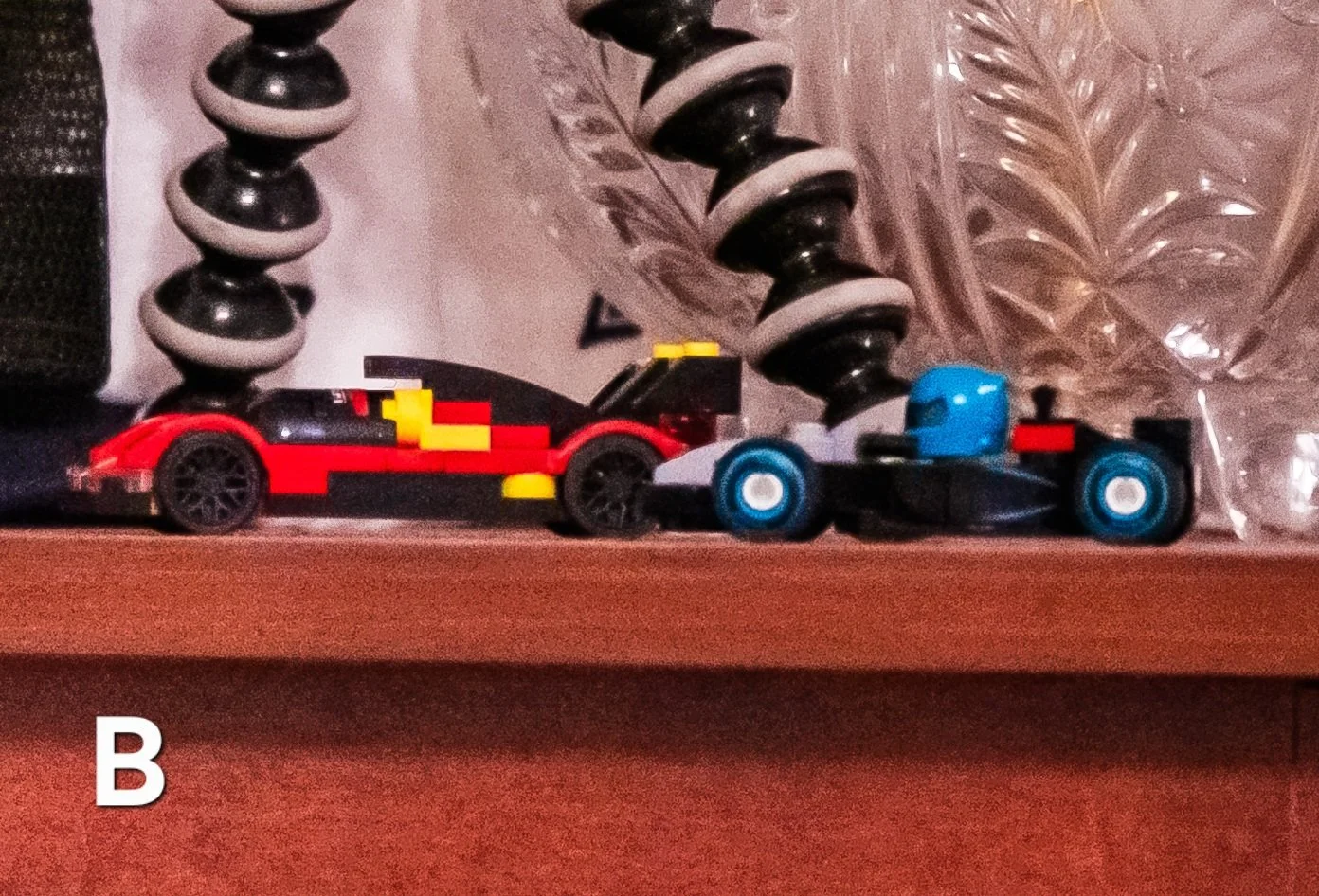
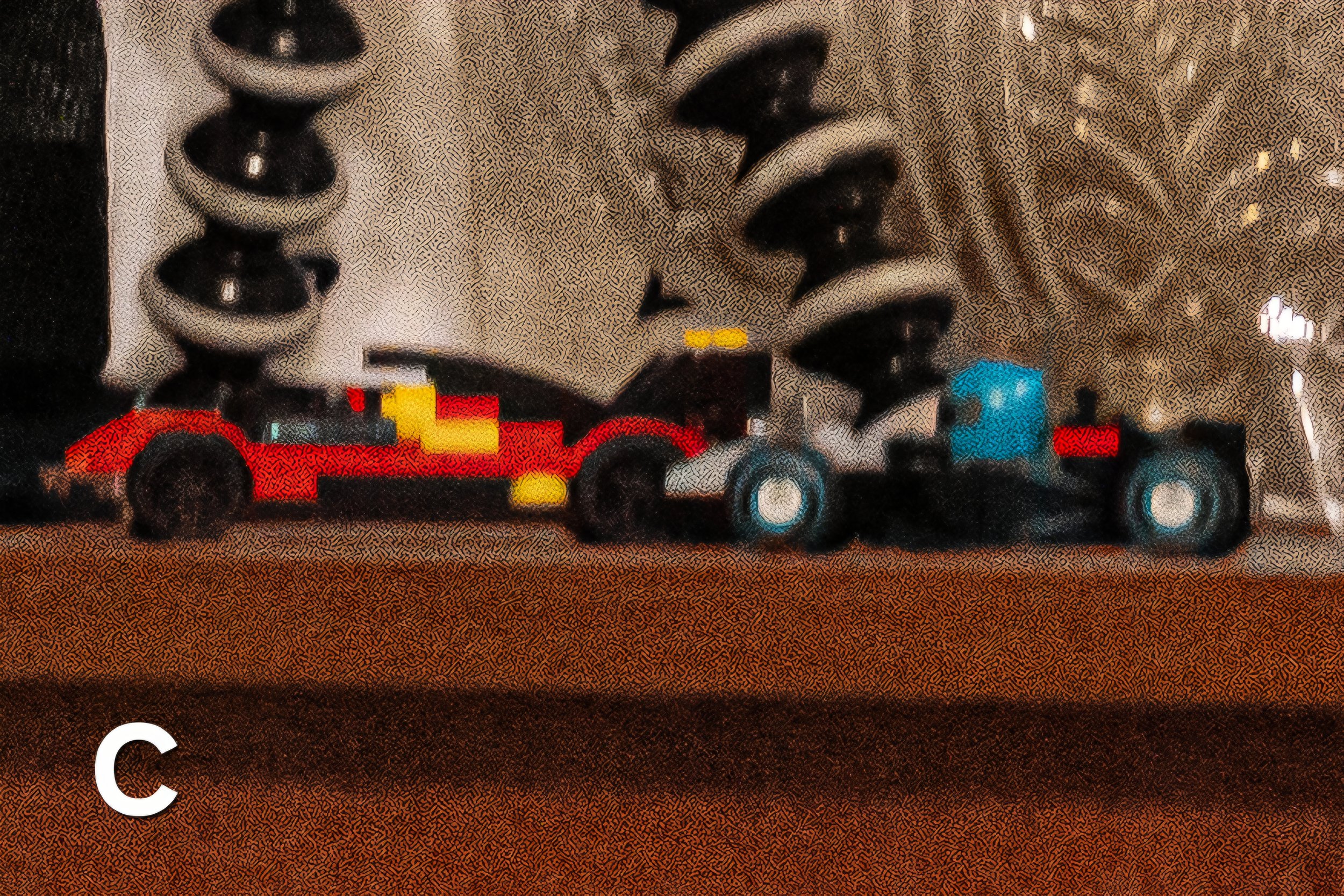
Results Part 1: No Lights
Sony A230: The Minolta 75-300mm lens was the A230’s saving grace in this low-light battle, and honestly may not be a perfect 1:1 comparison with the 17-70mm on the Fuji or kit lens on the A6700.
Sony A6700: Borderline unusable, and the 26mp sensor could not save the limitations of a kit lens in the low light. An unfair fight for this camera, if I’m being honest.
Fujifilm X‑T4: It was held back by the zoom limitations of the Tamron lens, but given the conditions, I’m not upset.
I'm calling the lights out round a push, mainly because none of the three images would be usable in any context that I can imagine.
Results Part 2: Overhead Light
Sony A230: Struggled badly. Autofocus was unreliable, noise was heavy, and shadow detail fell apart quickly.
Sony A6700: Surprisingly underwhelming. Not unusable, but far noisier than expected given its age and reputation.
Fujifilm X‑T4: The clear winner. Thanks to Fuji’s dual‑gain ISO implementation, noise was minimal and focus was tack‑sharp.
All three shots with the overhead light on were taken at f/6.3 to give each system the best possible chance at accurate focus. Even so, the X‑T4 delivered noticeably better dynamic range and cleaner files. I know that the A6700 was at a disadvantage with its kit lens; the Minolta 30-80mm on the A230 outperformed the kit lens, and the dual gain ISO on the X-T4 created a cleaner image at a distance.
What surprised me most was autofocus. The A230 actually beat the A6700 here in consistency. That’s not a compliment to the A230, it’s an indictment of how much the A6700 underperformed in this specific scenario. Low-light seems to be a Sony weak point, which confirms what I’ve heard from other Sony-primary wedding photographers and videographers. Given Sony’s recent string of successes with AI autofocus advancements, the blooming around highlights, the overall noisiness, and poor autofocus were pretty surprising to me.
Both Sony files leaned green, even in the RAW files. The Fuji did not.
Experiment 2: LEGO Figures in Daylight
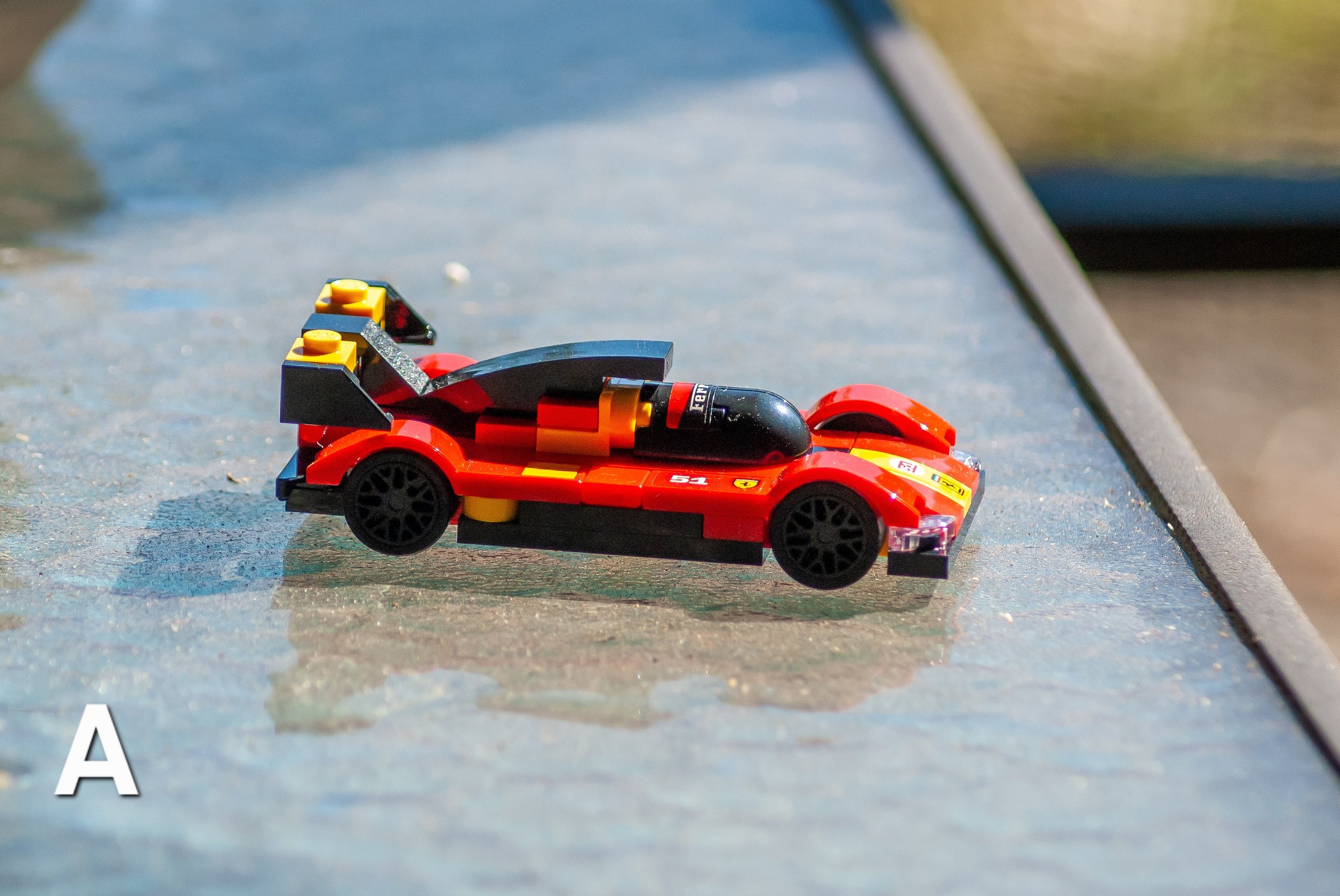
Next, I took the same LEGO setup outside in full daylight. LEGO bricks are great test subjects: sharp edges, fine detail, but simple enough to remove artistic variables.
In daylight, all three cameras produced excellent images. This is where the myth of “old cameras can’t compete” really starts to fall apart. It really took some significant pixel-peeping to tell these three shots apart for detail/sharpness when viewing on a phone screen.
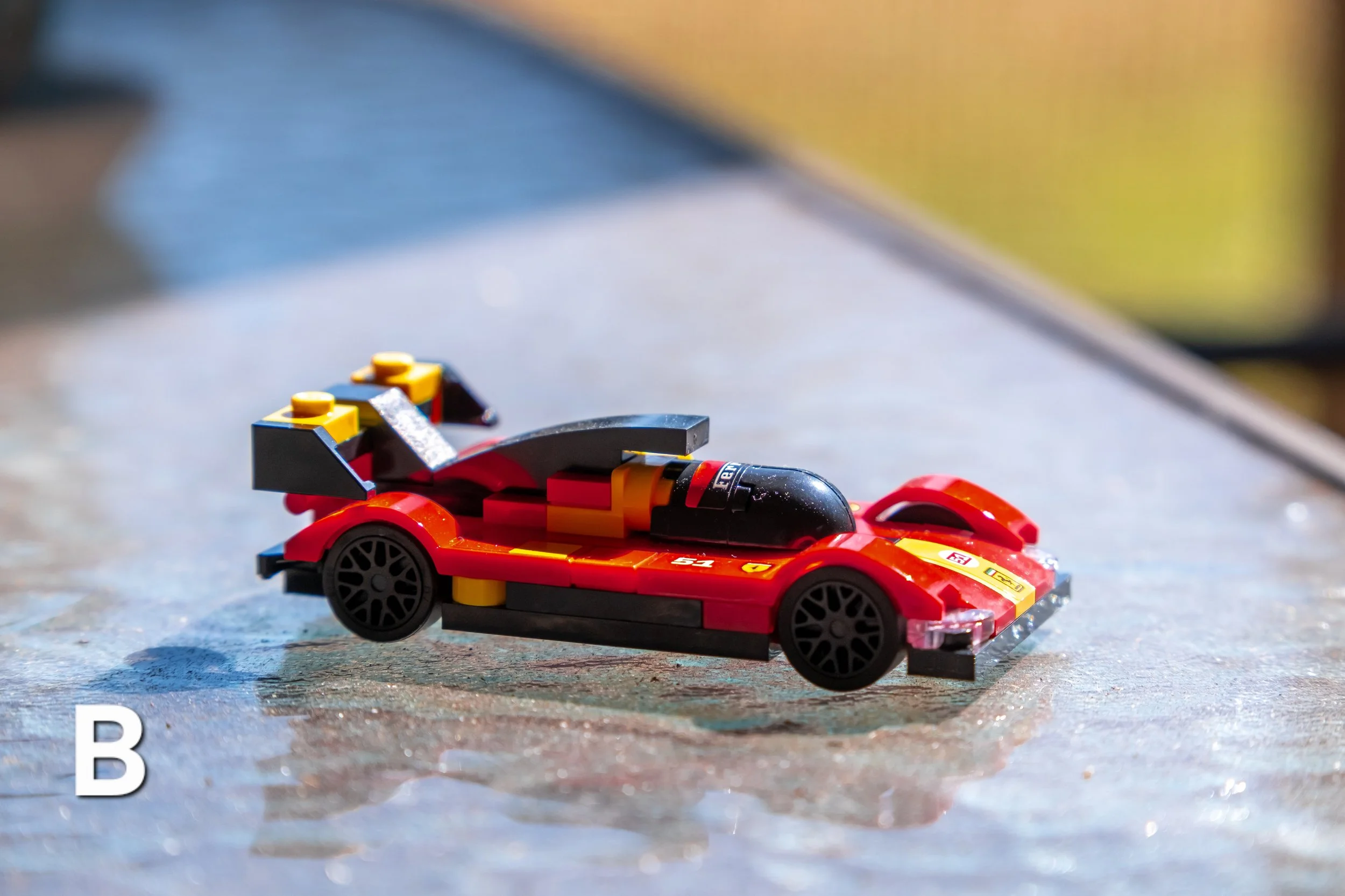
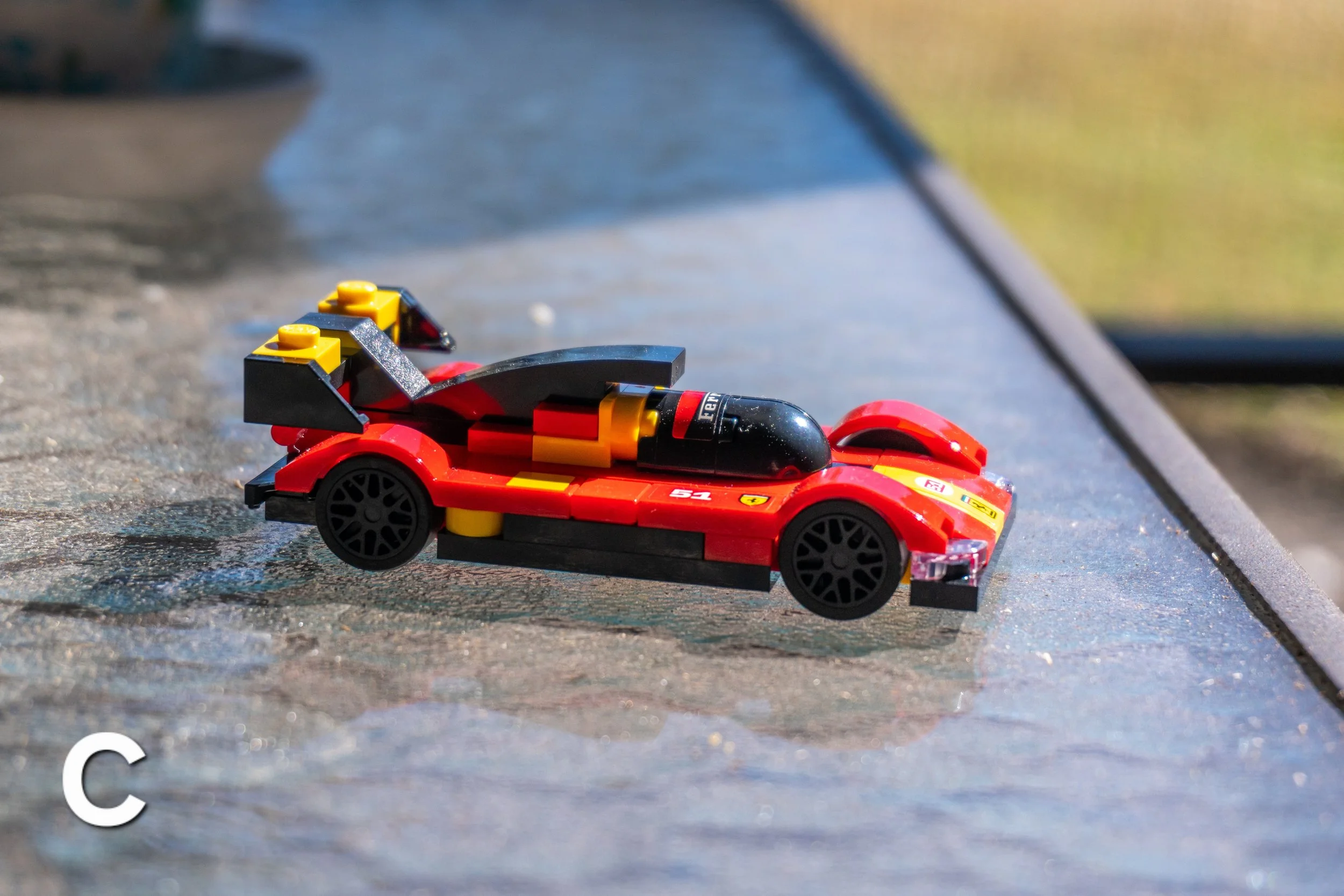
Results:
The A6700 produced my favorite image overall; slightly crisper and more contrast‑rich.
The X‑T4 came in a very close second. Any difference may honestly come down to subtle changes in sunlight, but the Sony edged it out here.
The A230, shockingly, held its own. At 16 years old with 30‑year‑old glass, it delivered files that only fall apart under pixel‑level scrutiny.
The biggest limitation with the Minolta lens was minimum focus distance. Both modern cameras/lenses could focus within inches of the subject; the A230 required stepping back a foot or two.
Still, this was the first moment where I was forced to say: the old girl still has it. It came down to pixel-peeping on this one.
Experiment 3: Mixed Light – Fiddle Leaf Fig
This scene included direct sunlight, dappled shadows, and deep greens—perfect for testing color and dynamic range.
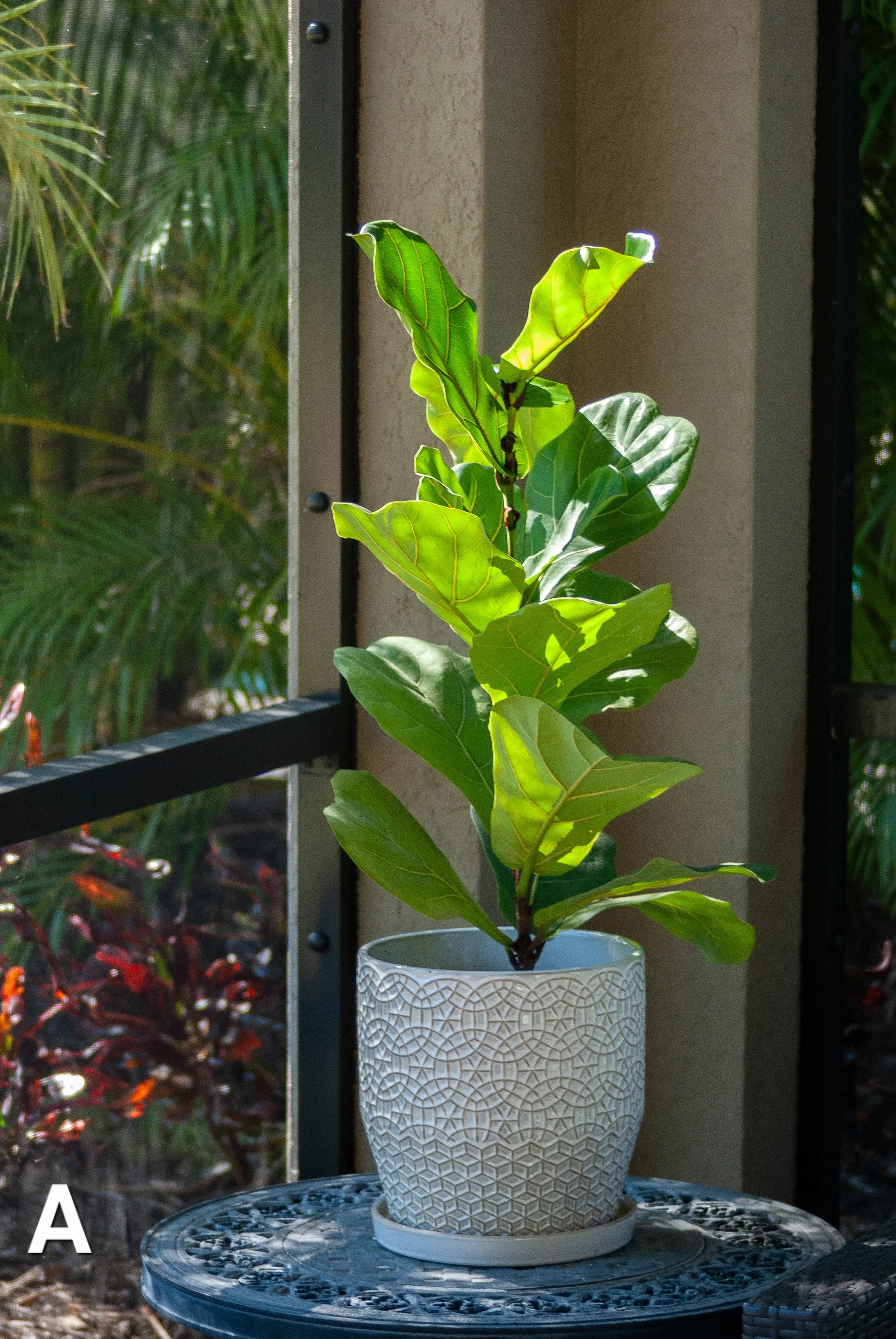
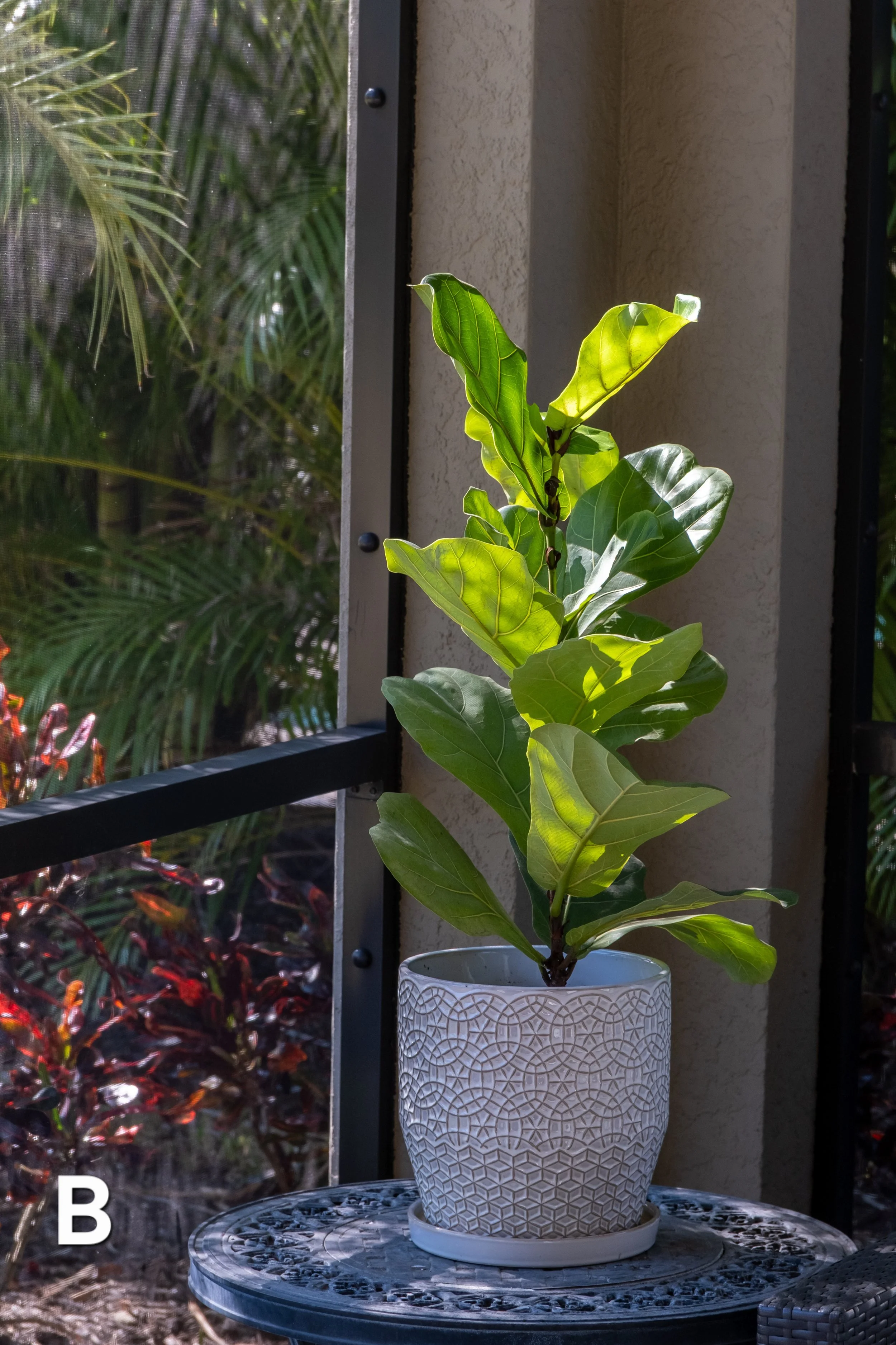
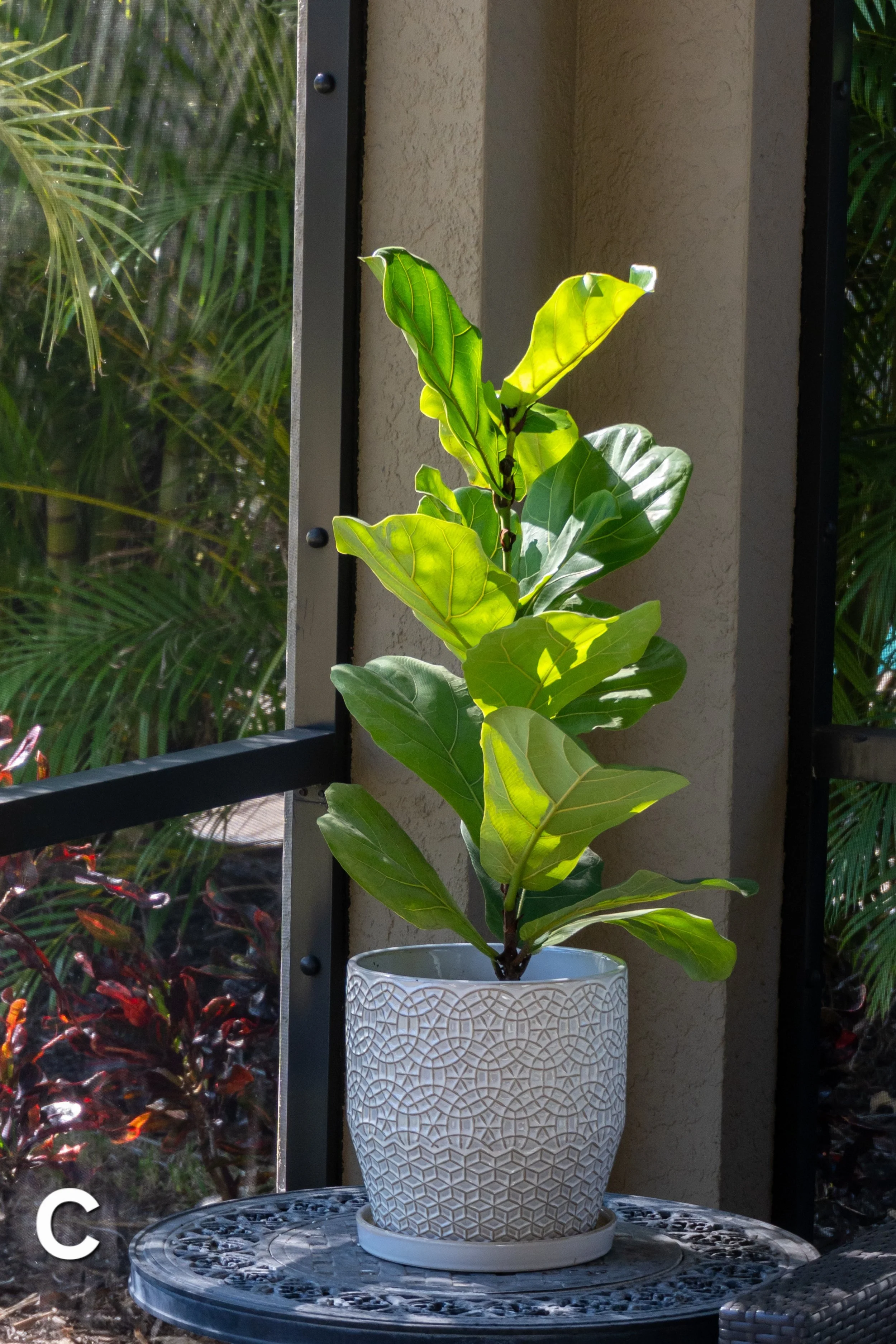
Results:
Both Sony cameras leaned noticeably green, making the images less pleasing straight out of camera.
The Fuji colors matched what I saw in real life more closely, and I preferred the level of sharpness here and detail in the leaves.
The A6700 edged out the X‑T4 in dynamic range, preserving slightly more highlight detail.
The A230’s focus missed, which isn’t shocking given its 9‑point AF system, vs modern “AI-enabled Autofocus” on it’s Younger Sibling.
I shared these images with three photographer friends. All noticed the Sony green shift immediately, with all preferring the color of the X-T4. One preferred the A6700’s crispness over the others. I personally found the A6700’s rendering a bit sterile and leaned toward the Fuji’s balance of detail and color. But this is another experiment where it comes down to pixel-peeping. If you didn’t know that one of these cameras is old enough to drive a car, you’d just assume that the internet was compressing the image slightly.
Experiment 4: Architecture – Solis Hall, Wellen Park
I then took all three cameras to the little town center across the street from me and shot one of the local wedding venues there. Solis Hall is mostly white stucco with Edison-style light fixtures, and it contrasts nicely against the bright blue sky and green foliage. This kind of modern architecture photography is where cameras either shine or fall apart.

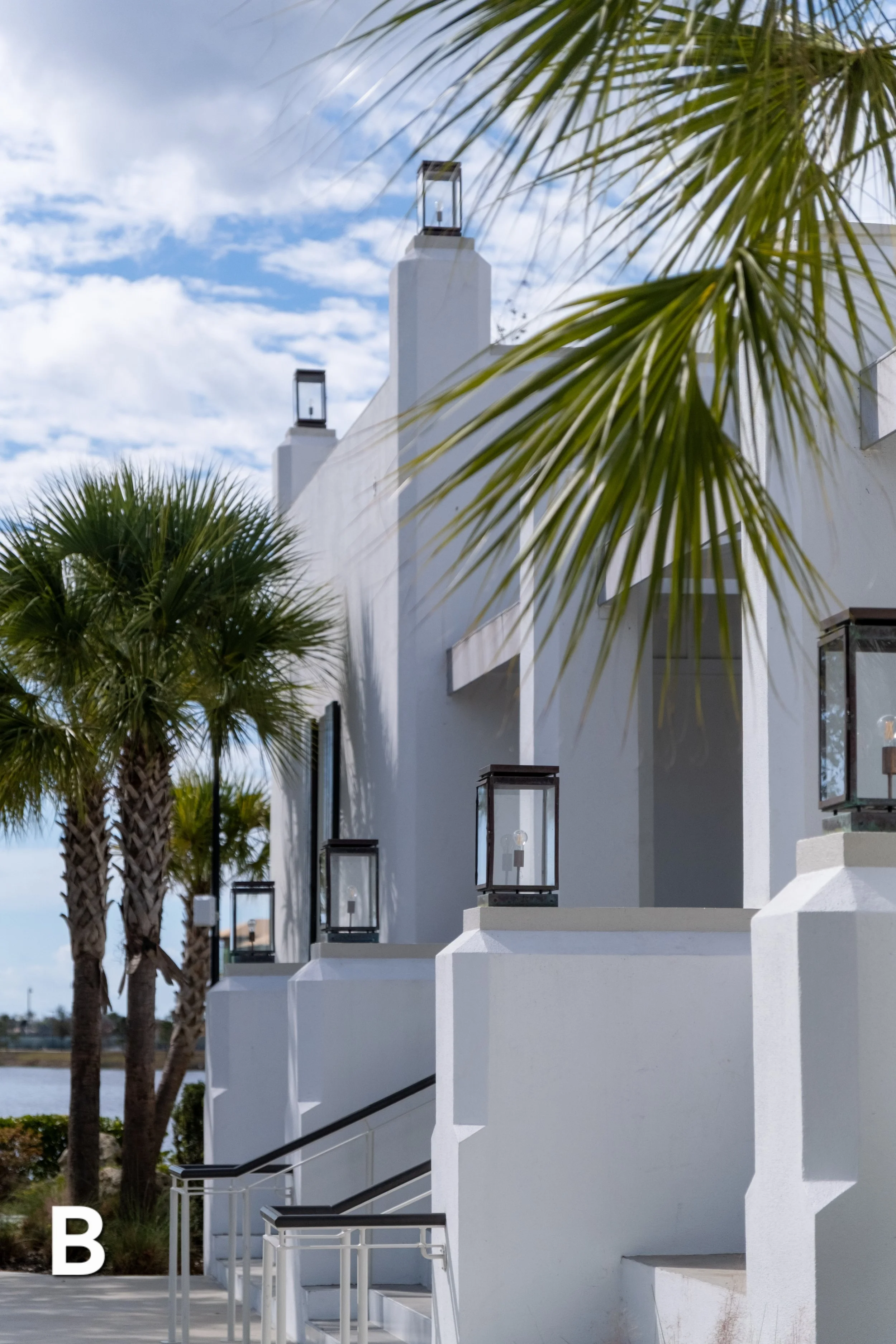


Side of the Building
A230: Clearly the weakest. Focus hunting ruined several frames. White surfaces skewed green, skies lacked depth.
A6700: Sharp, but warm with a persistent green tint.
X‑T4: Best overall balance of color accuracy and dynamic range.
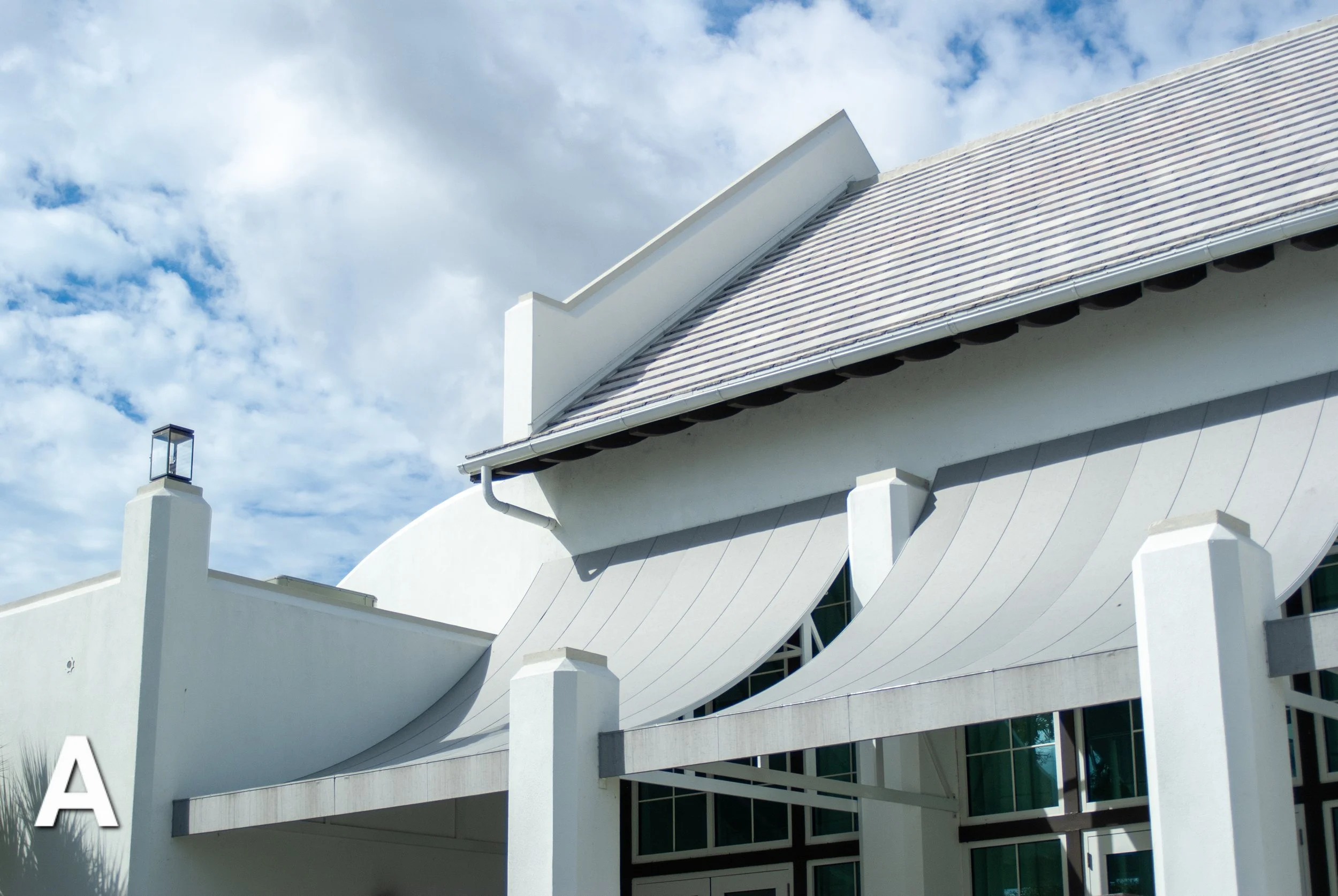
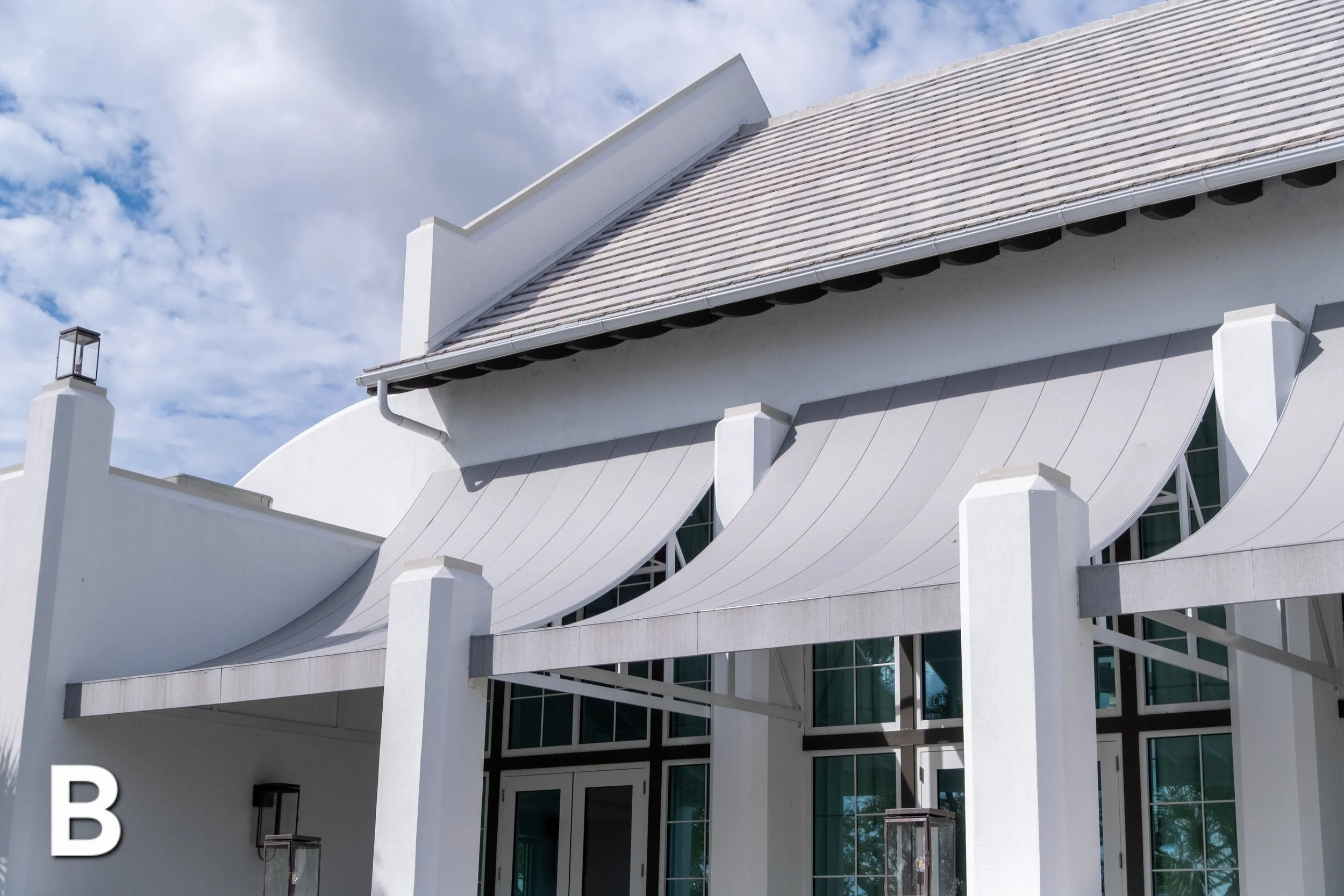
Roofline & Sky
Shooting the roofline against a partly cloudy sky revealed dynamic range limitations:
The X‑T4 again outperformed both Sony-s, holding highlights and shadows simultaneously.
The A230 was nearly unusable here.
The A6700 improved, but still lagged behind Fuji in tonal flexibility.
Look, I may be a bit of a perfectionist who struggles with a love for imperfect vintage feels in photos (a contradictory experience at best and painful at worst), but something about the green color-cast combined with the limitations in the dynamic range both (1) frustrated me with the A230 and (2) made me scratch my head with the A6700. I don't think I can be too frustrated with an almost two-decade-old camera (the A230) for not having a perfect image, but for a camera that's brand new and has a passable kit lens (the A6700), I felt like this scene was lacking.
It makes me both wonder (1) what the A6700 with a better lens is capable of, but also (2) wonder why Sony's color science chooses to render colors the way it does.
Experiment 5: Lighthouse Across the Lake
This test pushed distance detail, water highlights, and foliage sharpness. I put a bit of a tree branch in the near foreground to blur out, a palm tree in the middle ground, an expansive lake, and then finally a lighthouse with even deeper trees in the background. The goal was to see dynamic range and detail and the results here really showed the separation in tech over the decades.
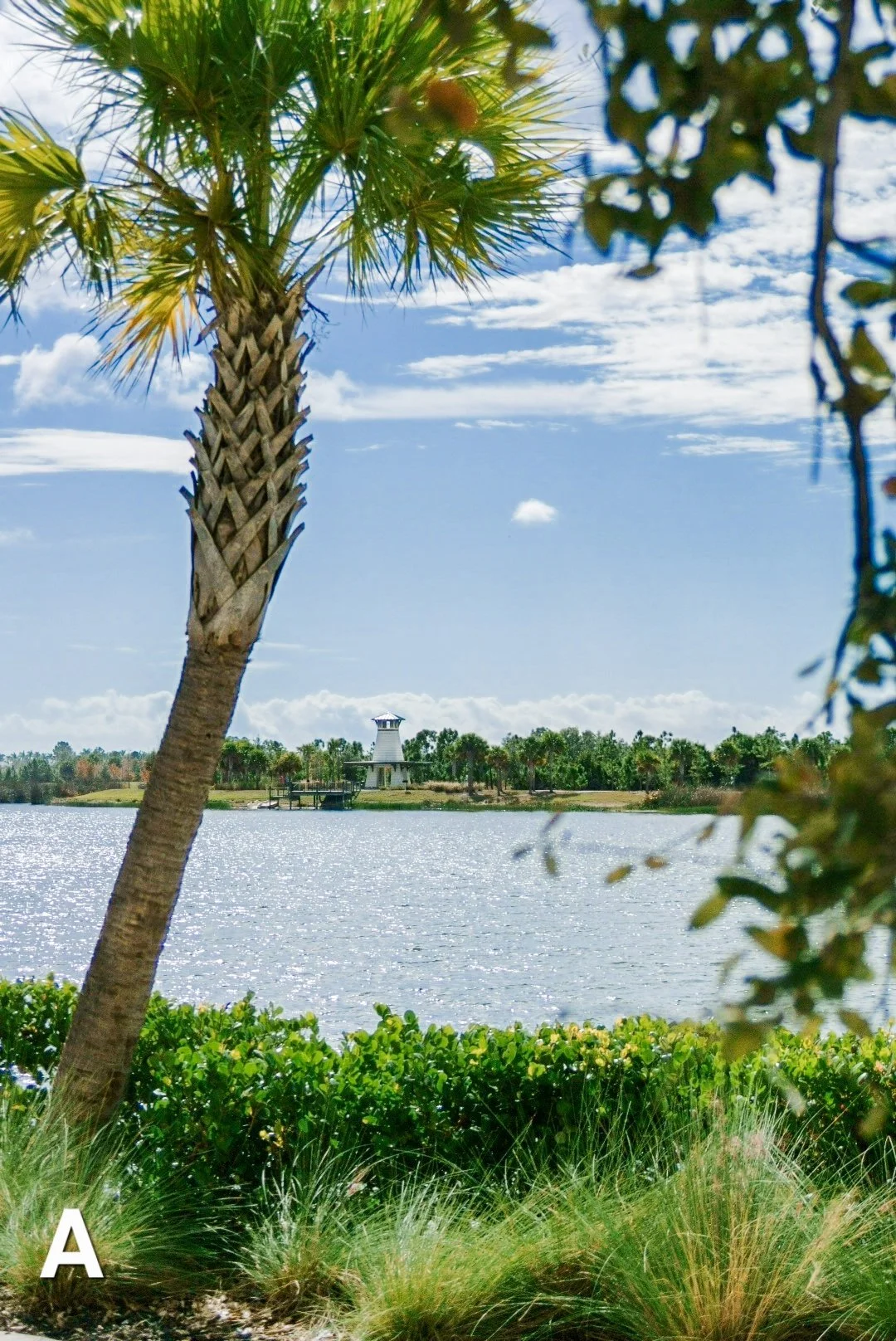
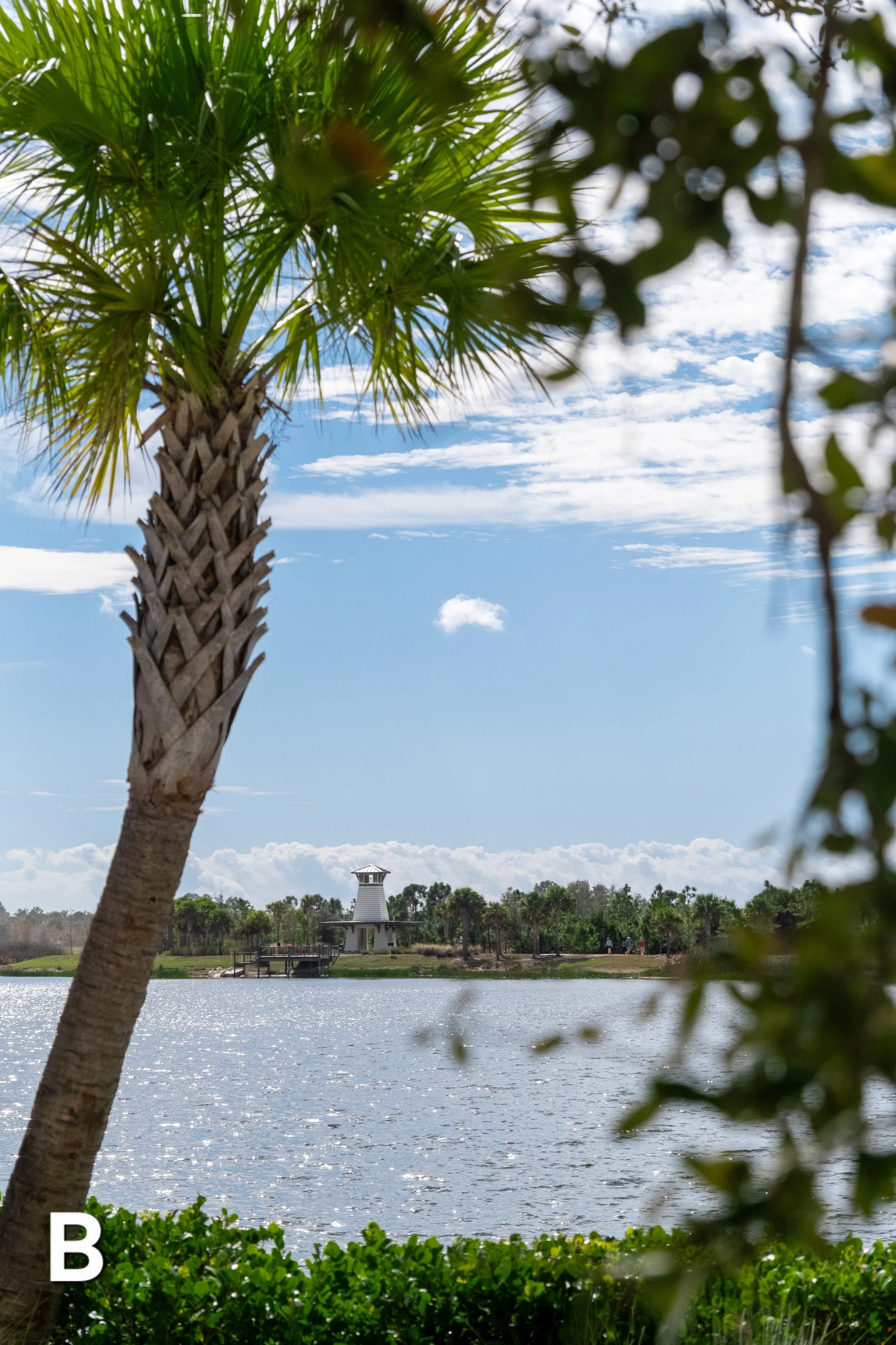
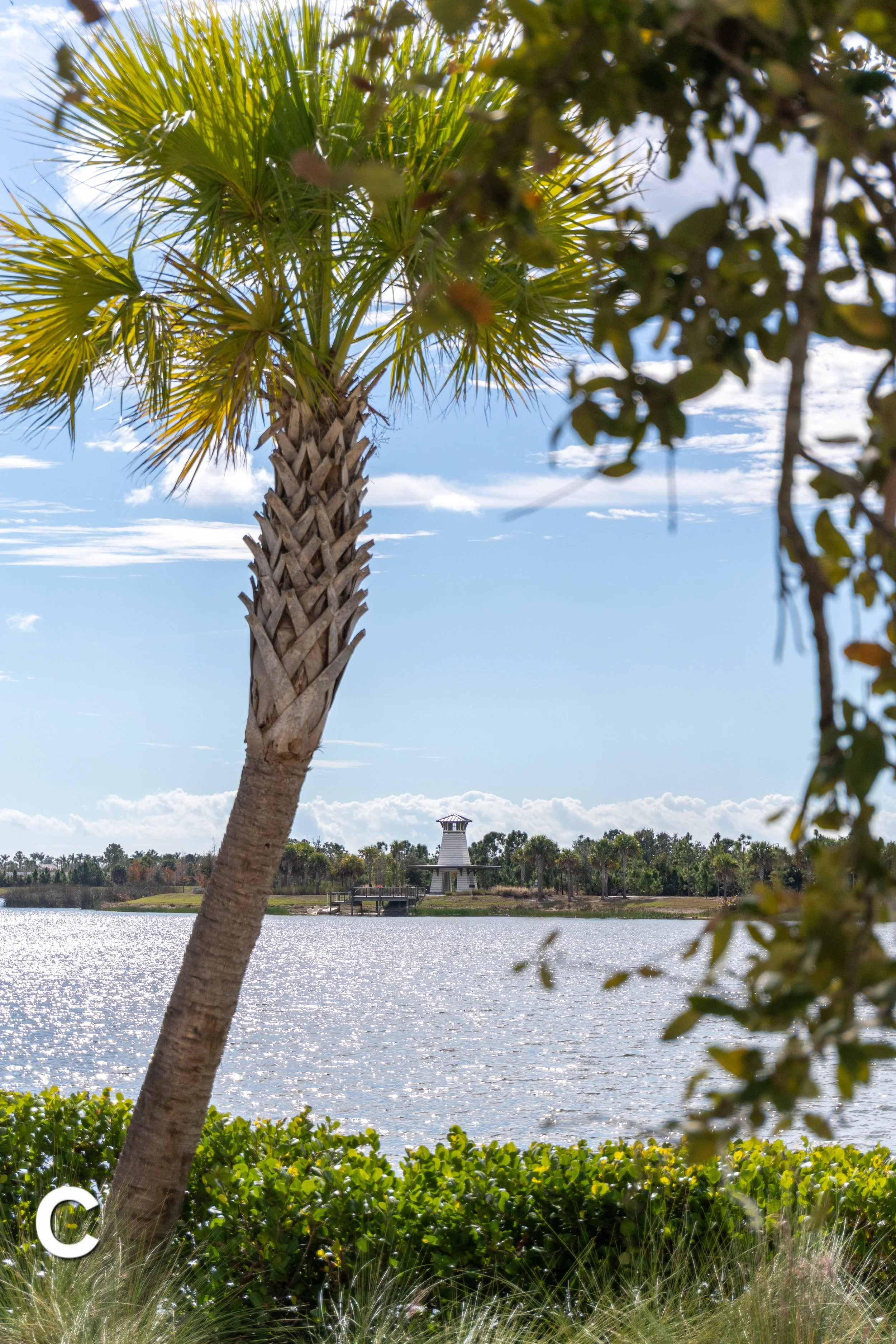
Results:
A6700: Excellent sharpness, especially in the distant tree line. However, chromatic aberration on water highlights required correction in post.
X‑T4: Superior color, smoother tonal transitions, and better highlight retention on the metal roof.
A230: Fell apart completely. Poor dynamic range, ugly green cast, and severe chromatic aberration.
Interestingly, the A6700 may have slightly out‑resolved the Fuji in the deep distance background foliage, suggesting either better focus accuracy or lens behavior at distance. But what it gained in sharpness at a distance, it lost in detail in the highlights on the water and the metal roof of the lighthouse.
Experiment 6: Details on the Solis Hall Sign
It’s a visually boring shot, but then again, high‑contrast detail shots reveal a lot.
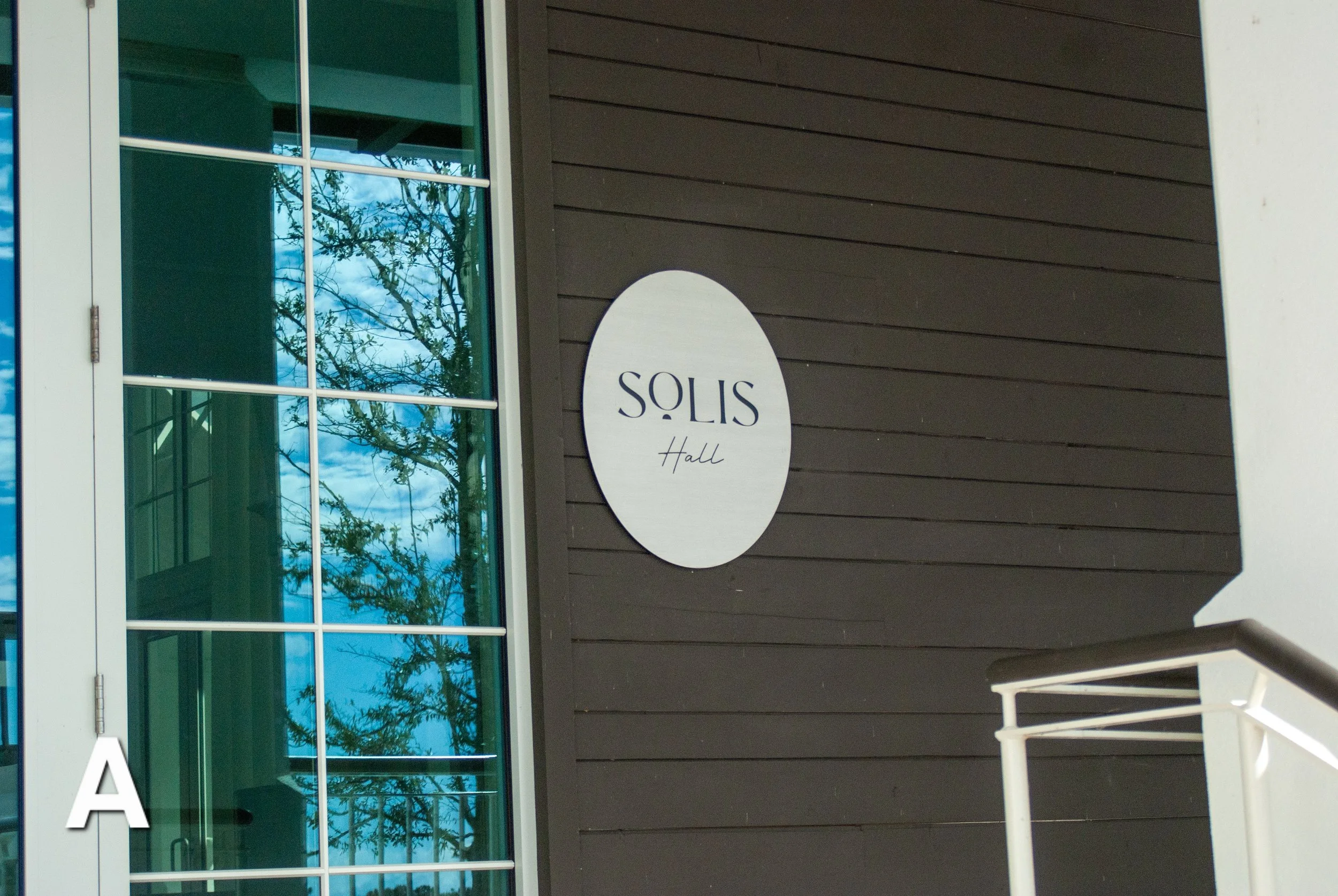
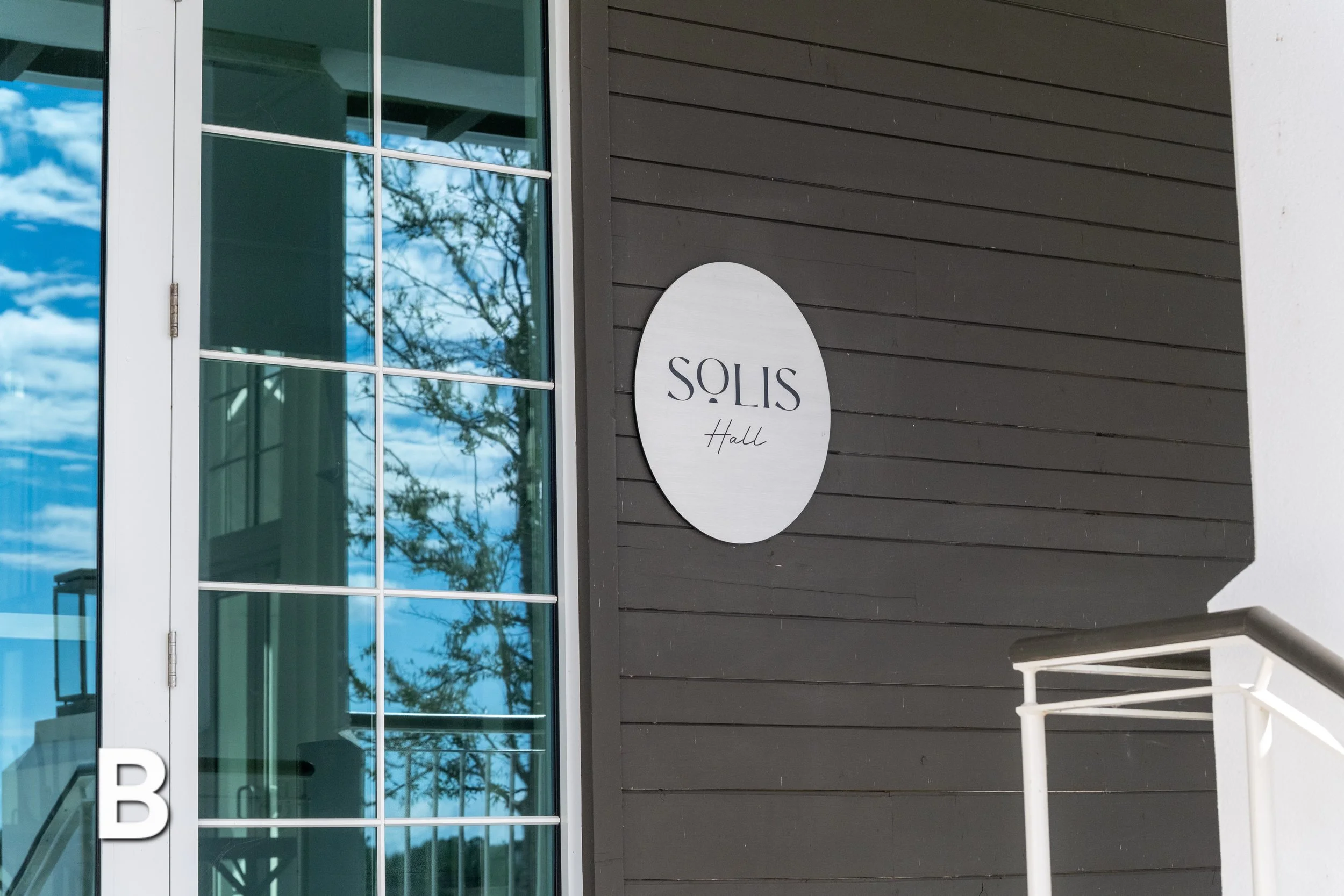
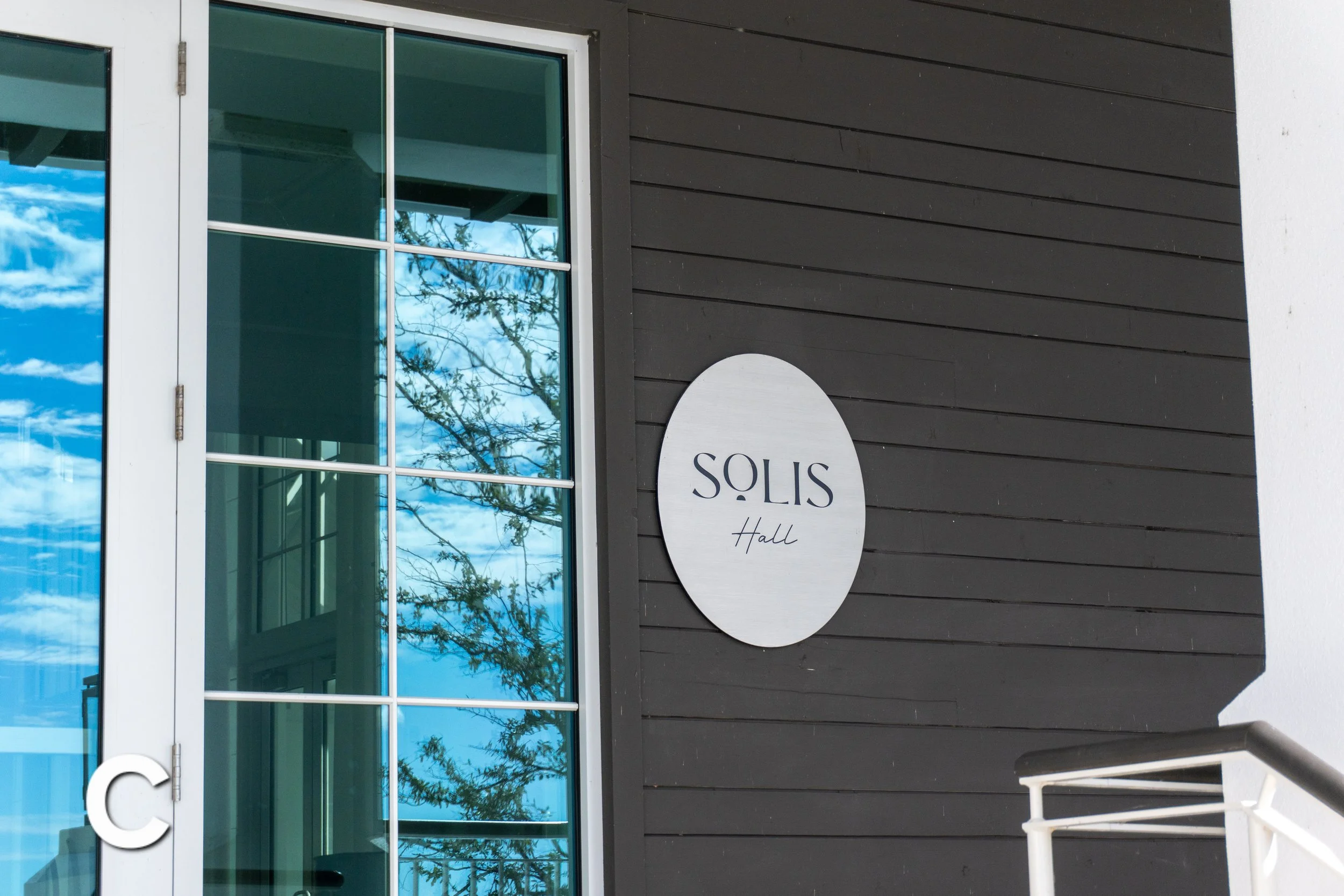
Results:
A230: Produced a subtle halo around the sign edges.
A6700: Razor‑sharp and true‑to‑life, but with minor fringing on high‑contrast edges with the black-on-white text on the sign.
X‑T4: Excellent detail, minimal chromatic aberration, and the best overall tonal balance.
This is another one that really leans into pixel peeping, but it's a good example of where dynamic range and a higher megapixel count really play in the advantage of the modern technology.
What This Experiment Reinforced
1. Gear Acquisition Syndrome (GAS) Needs Context
Yes, newer gear is better—but not orders of magnitude better. Improvements are incremental, not revolutionary. I love upgrading gear as much as the next photographer, but I realize that anything I buy needs to have a specific purpose and noticeable improvements over my legacy gear
2. Marry the Glass, Date the Body
The Tamron 17–70mm f/2.8 outperformed the Sony kit lens despite being mounted to an older body. And simultaneously, 30‑year‑old Minolta glass kept a deeply outdated DSLR surprisingly competitive. Is the Tamron the world's greatest lens? Not by a long shot. BUT: A good zoom with a great aperture or a handful of inexpensive primes will outperform a budget zoom with a weak aperture.
3. Fuji’s Dual‑Gain ISO Is a Real Advantage
For low‑light shooters—especially wedding photographers—this matters. APS‑C with good ISO management can compete with full‑frame without the financial penalty. I've seen other wedding videographers and photographers talk about moving up to full-frame for this specific reason; but when I see how an APS-C camera can compete with not only full-frame, but other contemporary APS-C cameras, I have to wonder why more companies aren't using this same technology.
4. Sony’s Color Science Is a Weak Point
The dynamic range limitations and green color cast left me disappointed. RAW helps, but starting with better color matters. It reminds me of when I used to shoot Canon and we would make fun of Nikon for having wonderful dynamic range and horrible color science.
Final Thoughts
Know your purpose. Old cameras still work—especially for web delivery. Could you use the A230 for mobile content? Sure. Should you? Probably not.
If you need fast, reliable autofocus or video, modern mirrorless is non‑negotiable.
Color science does matter, even in a RAW workflow.
Fuji isn’t perfect. Autofocus hunting on the X‑T4 can be frustrating. And yes, I am well aware film simulations are just JPEG processing. Have I drank the Fuji Kool-Aid, and am I blindly following the cult talk-track? No, but the X-Trans sensor does in fact see light differently than a Bayer sensor in other cameras. And when blind tested, multiple other photographers consistently preferred the Fuji's shots over the Sony shots.
At the end of the day, this wasn’t about declaring a winner. It was about understanding trade‑offs, and most importantly remembering that great photography still depends more on intent, skill, and vision than the year stamped on your camera body.
About Alex:
Hi, I’m Alex — the photographer and filmmaker behind Alex Christian Creative. I specialize in cinematic wedding photography and videography for couples across Southwest Florida, creating story-driven imagery that feels natural, intentional, and timeless.
If you’re curious about the types of coverage I offer, check out my wedding photography services or wedding videography services. For couples who want authentic, everyday moments captured, my lifestyle photography services are designed to tell real stories, whether for engagements, family sessions, or creative projects.
Planning your day? You can also explore my pricing to see how I can help capture your memories without the stress of hidden costs, and if you have any questions I’d love to connect.
I’d love to help you tell your story — one frame, one moment, one wedding at a time.
